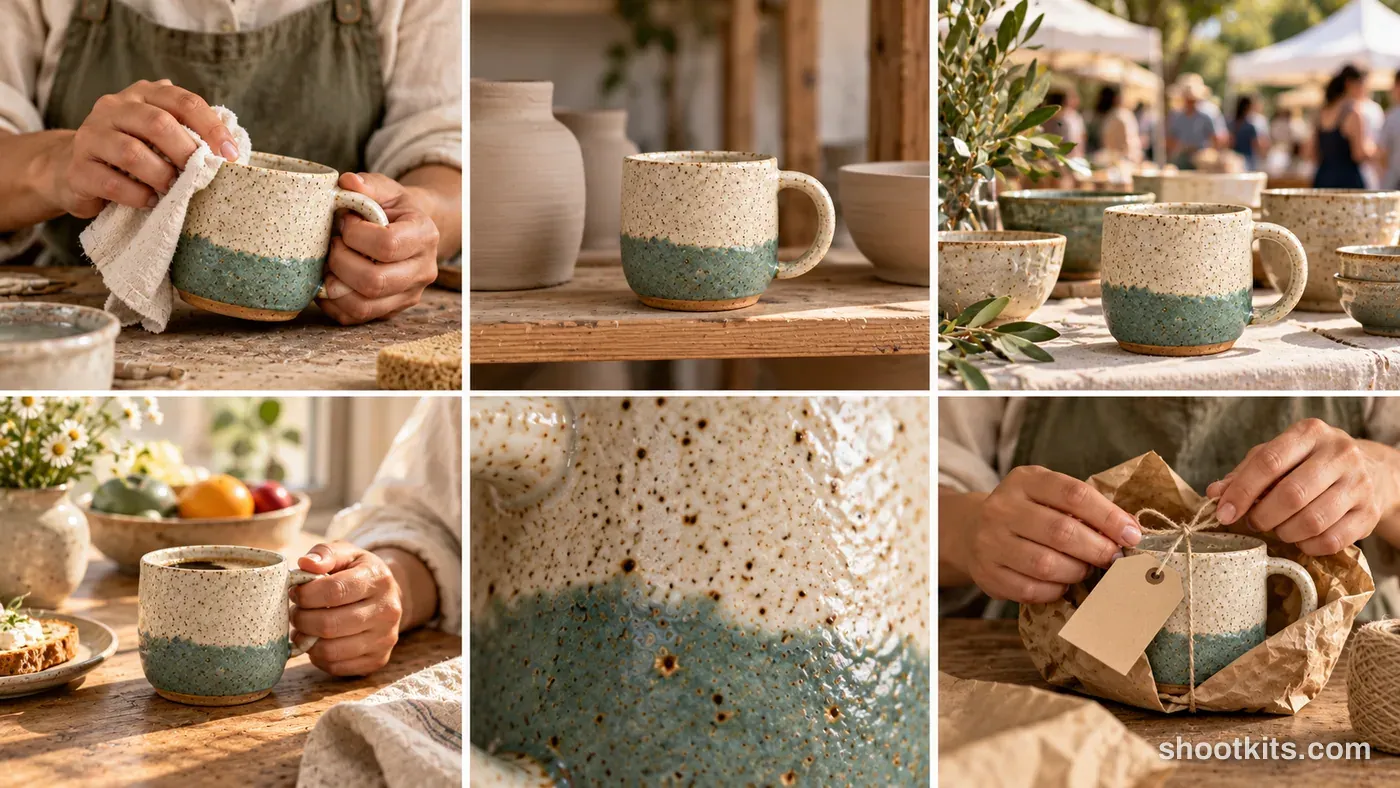
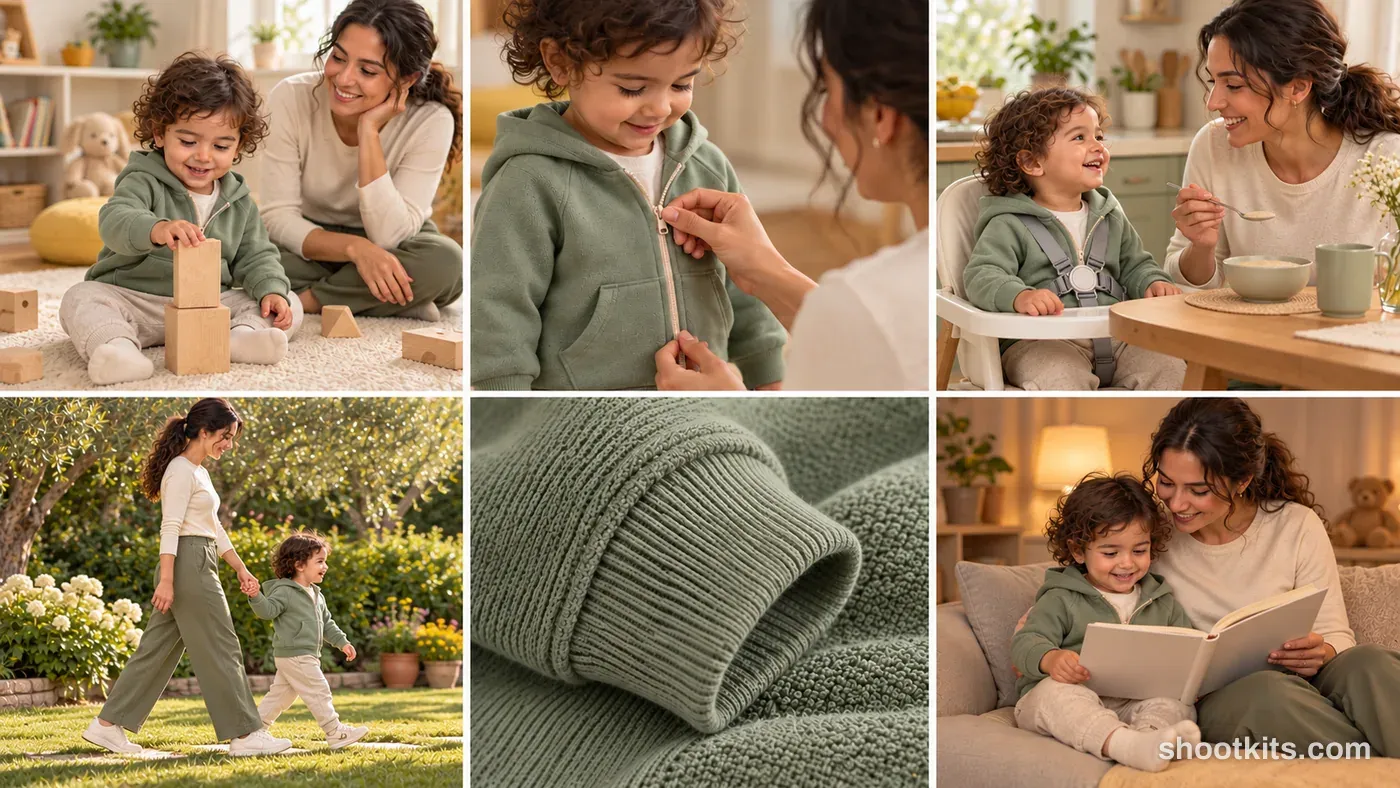
Lifestyle product photography
Last updated October 2026
Lifestyle product photography shows your product in use or in a real setting, such as a serum on a bathroom shelf or a watch on a wrist at a café, instead of alone on a white background. Plain product shots show what the product is; lifestyle shots show what it is like to own it. Most stores need both, and you can now make lifestyle images in ChatGPT from one clear product photo.
Lifestyle shots vs white-background product shots
Think of them as two halves of the same listing. Product shots on a plain background are for clarity: your main marketplace image, comparison grids and catalogues. Lifestyle shots are for desire: ads, social media, your homepage, email and the later image slots on a product page. A buyer scrolling Instagram stops for a scene, not a cut-out; a buyer comparing three listings wants the clean shot first.
- Product page: lead with a clean product shot, then two or three lifestyle images.
- Ads and social media: lifestyle images almost always perform better, because they tell a story in one glance.
- Homepage and email: one strong lifestyle hero per collection or launch.
What makes a lifestyle photo work
- The product is still the hero. It is sharp, well lit and easy to find in the frame, even in a busy scene.
- The setting matches your customer. A minimalist skincare brand belongs in a calm, bright bathroom; a streetwear label belongs on a city street at night.
- It shows use or scale. Hands, a body or familiar objects tell buyers how big the product is and how it is used.
- The light fits the story. Morning light for routines, golden hour for outdoor moments, warm lamp light for evenings.
- Props support, they don’t compete. A few objects that belong in the scene, in colours that work with the product.
- The set feels like one shoot. Same model, same light and the same palette across every image.
Lifestyle product photography ideas by product
Ideas that work for small brands, each with a free ChatGPT prompt that builds the scene around your own product:
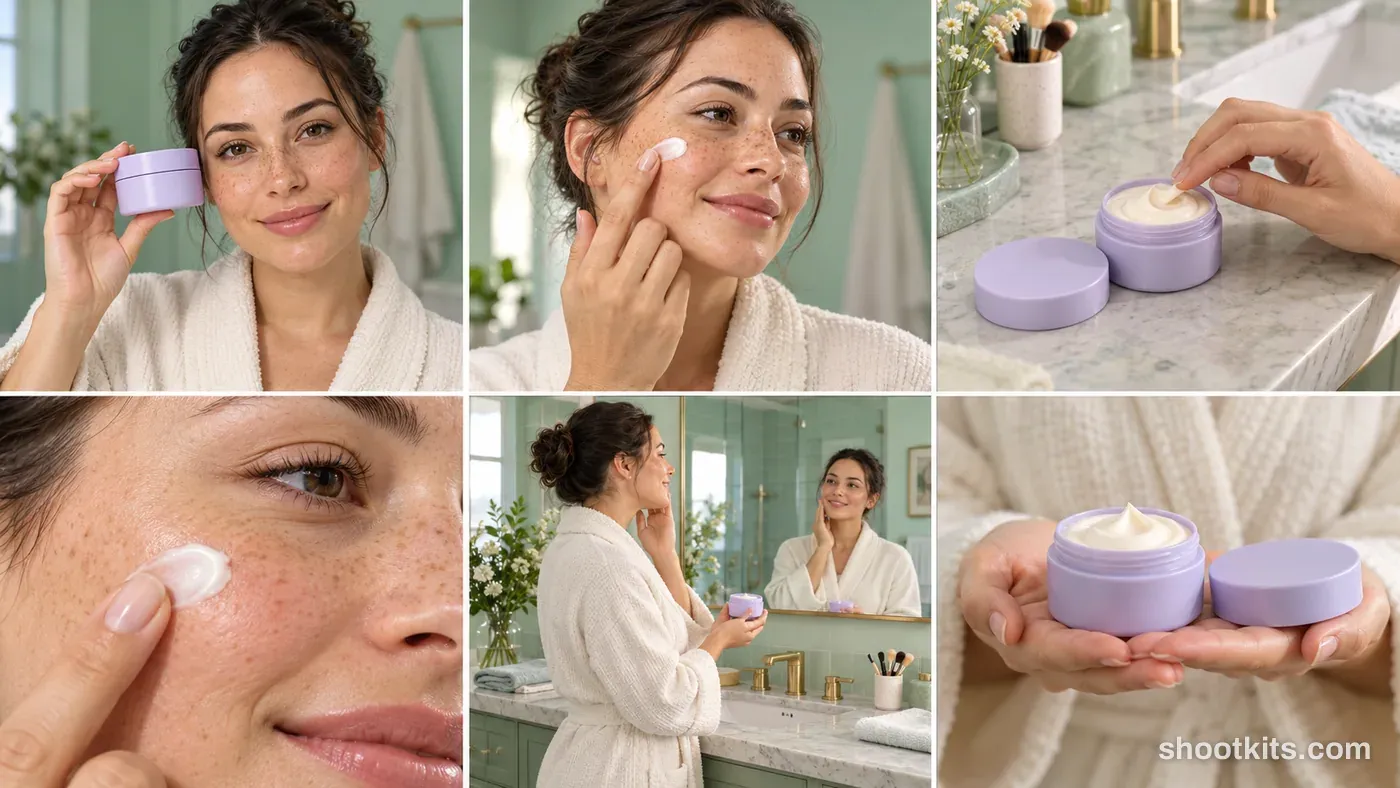
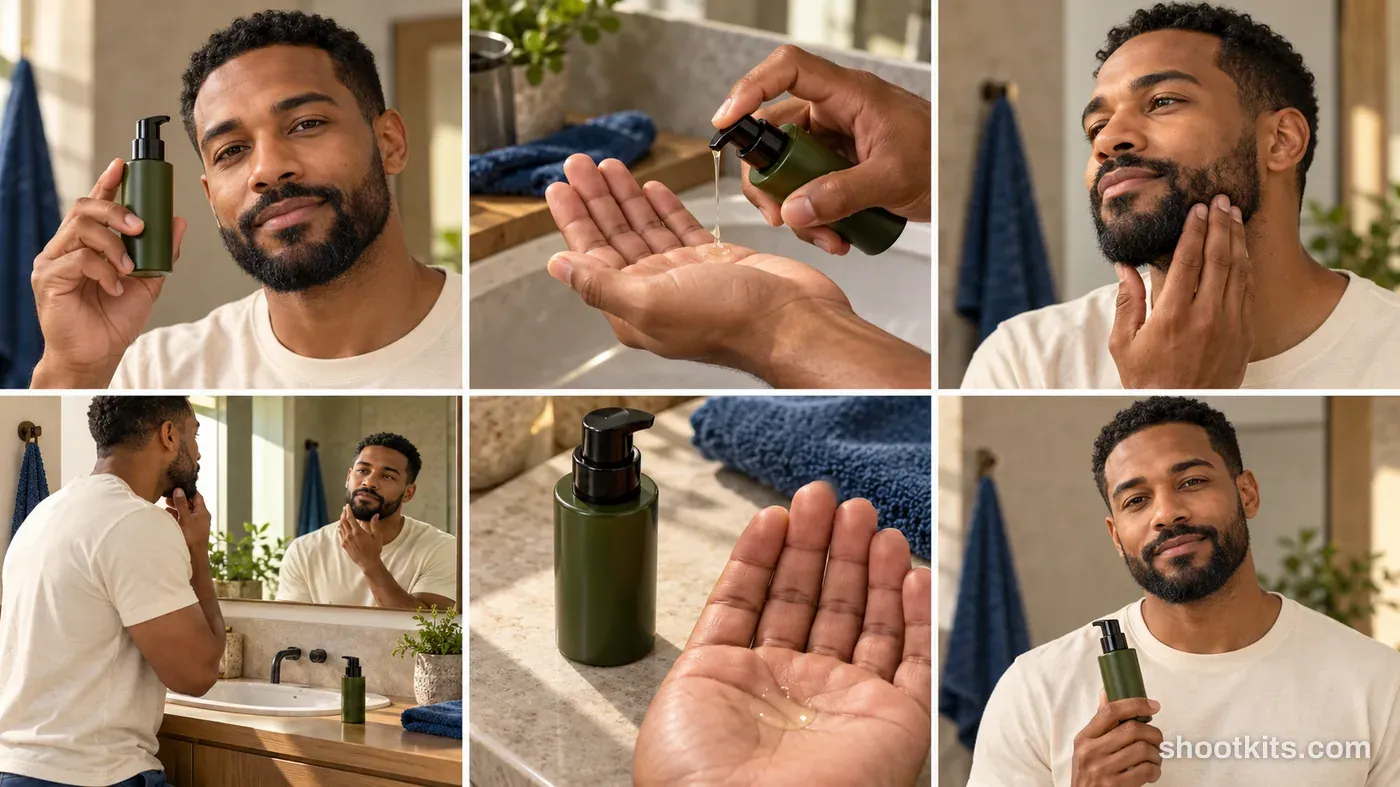
- Skincare: A serum on a bathroom shelf in morning light, a cream applied at the mirror, a cleanser beside a running tap.
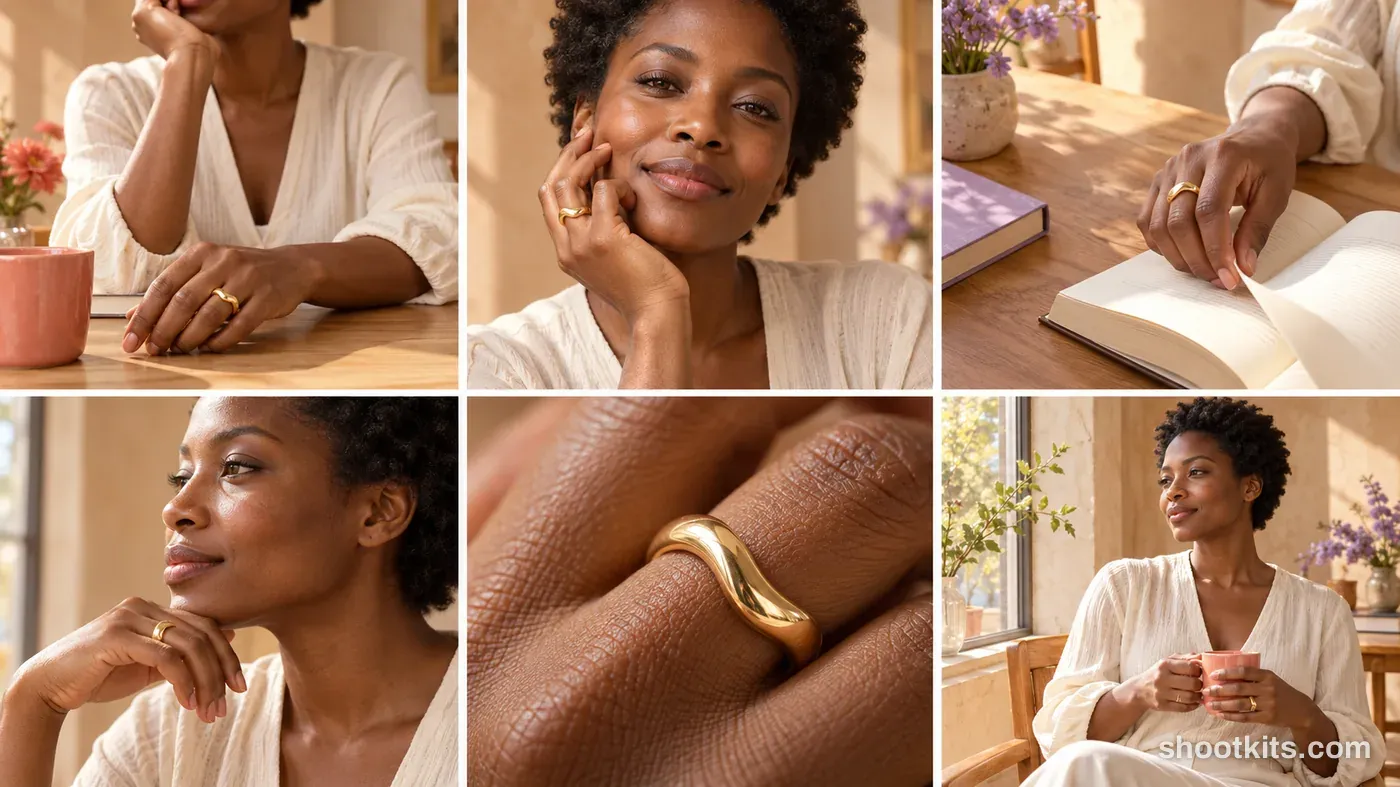
- Jewelry: A ring on a hand holding a coffee cup, earrings caught in window light, a necklace on a linen shirt.
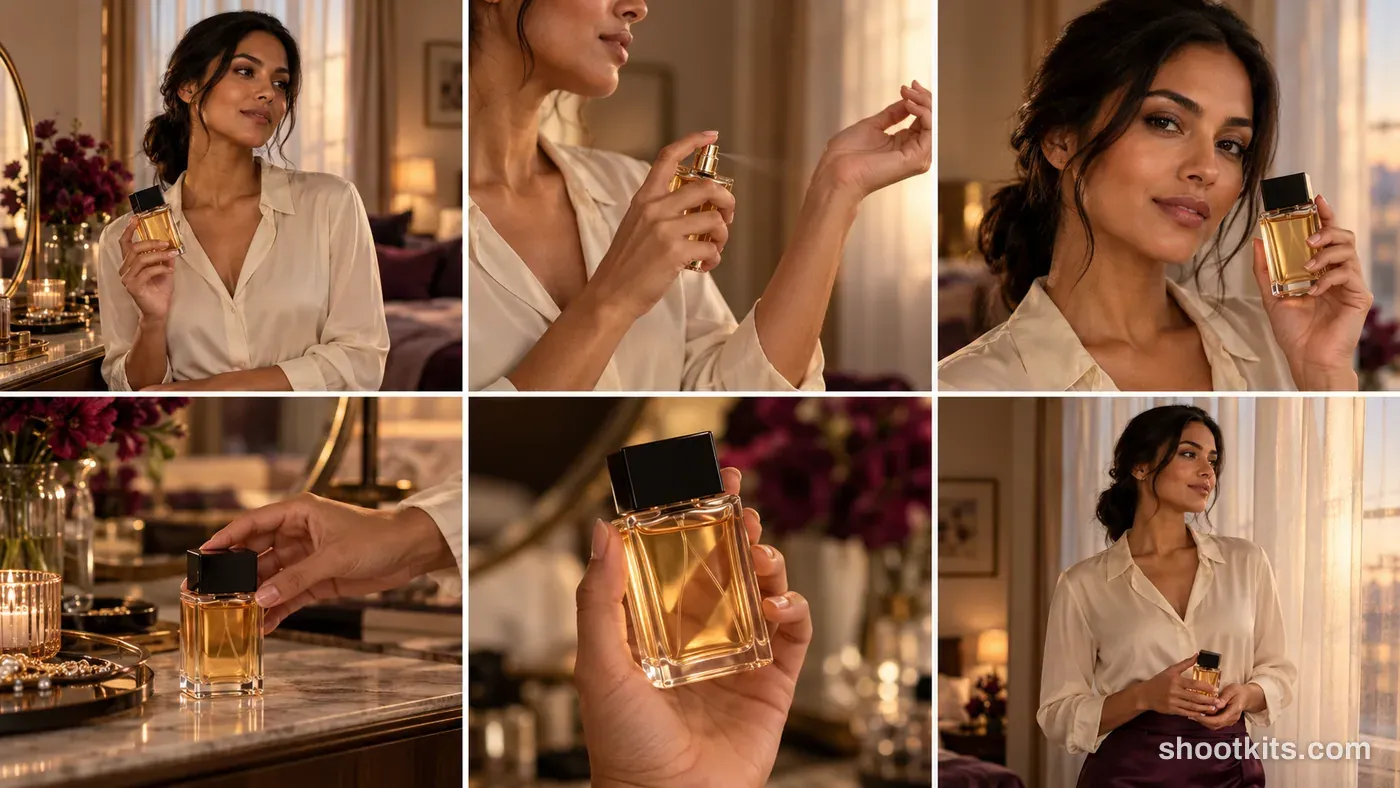
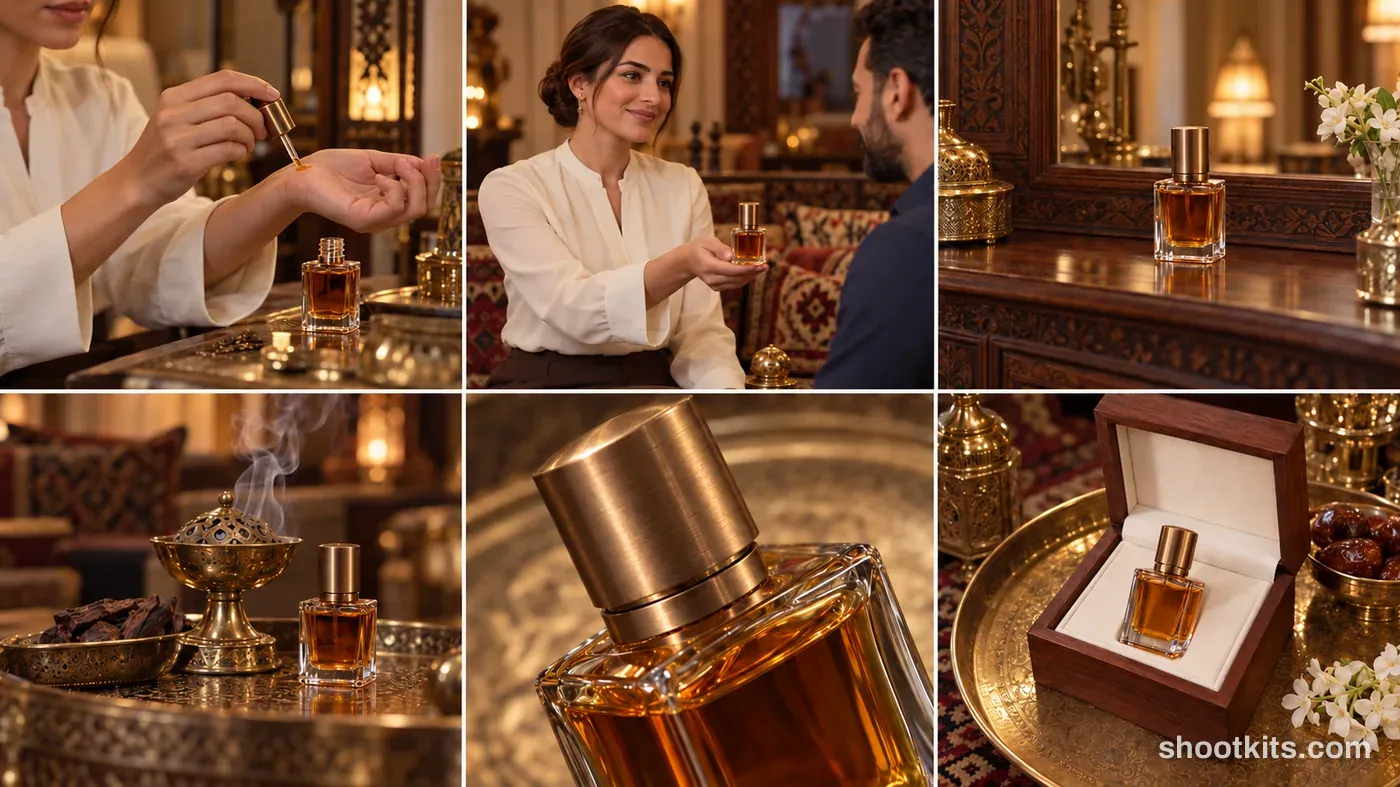
- Fragrance: A bottle on a dresser as someone gets ready to go out, a spritz on the wrist, a perfume on a hotel nightstand.
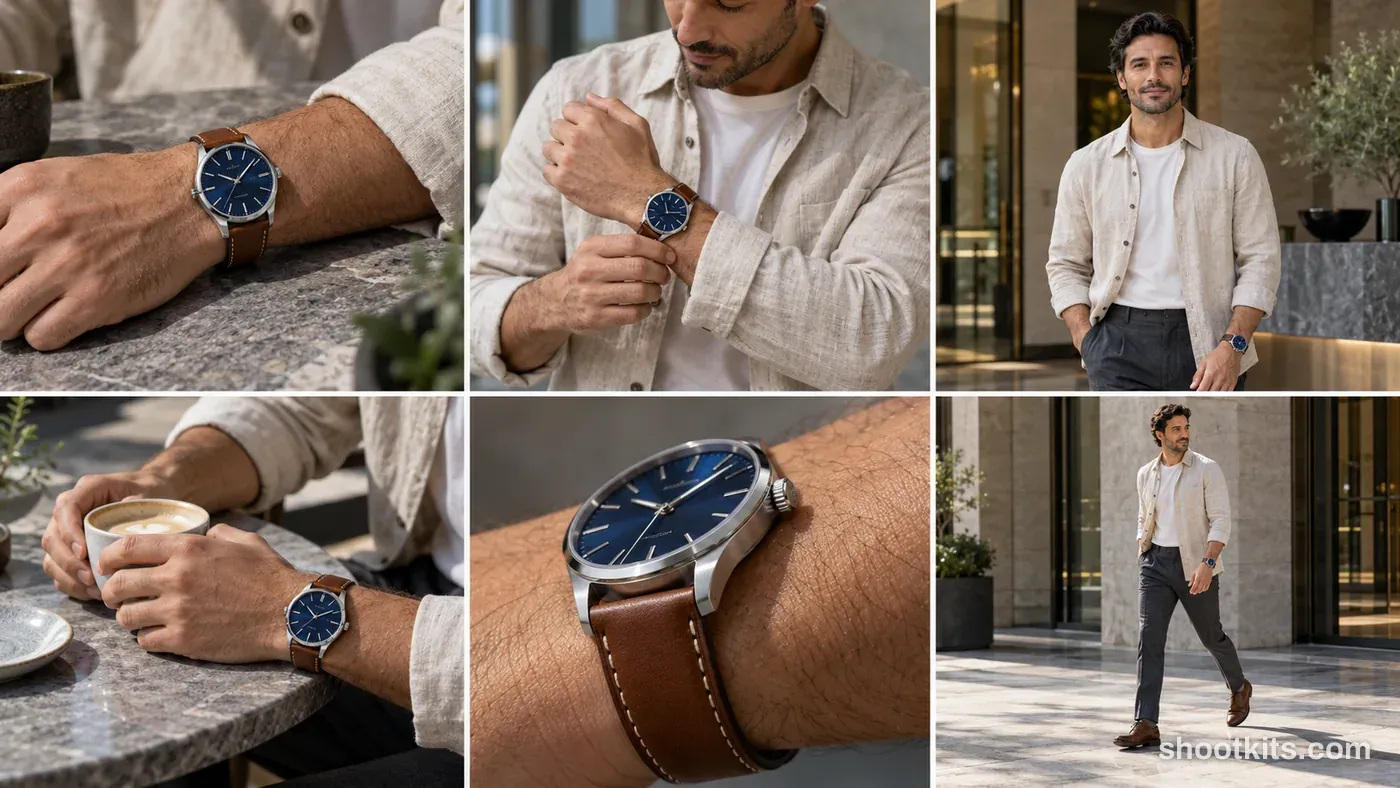
- Watches: A cuff pulled back at a desk, a hand on a steering wheel, a strap catching low sun at a café.
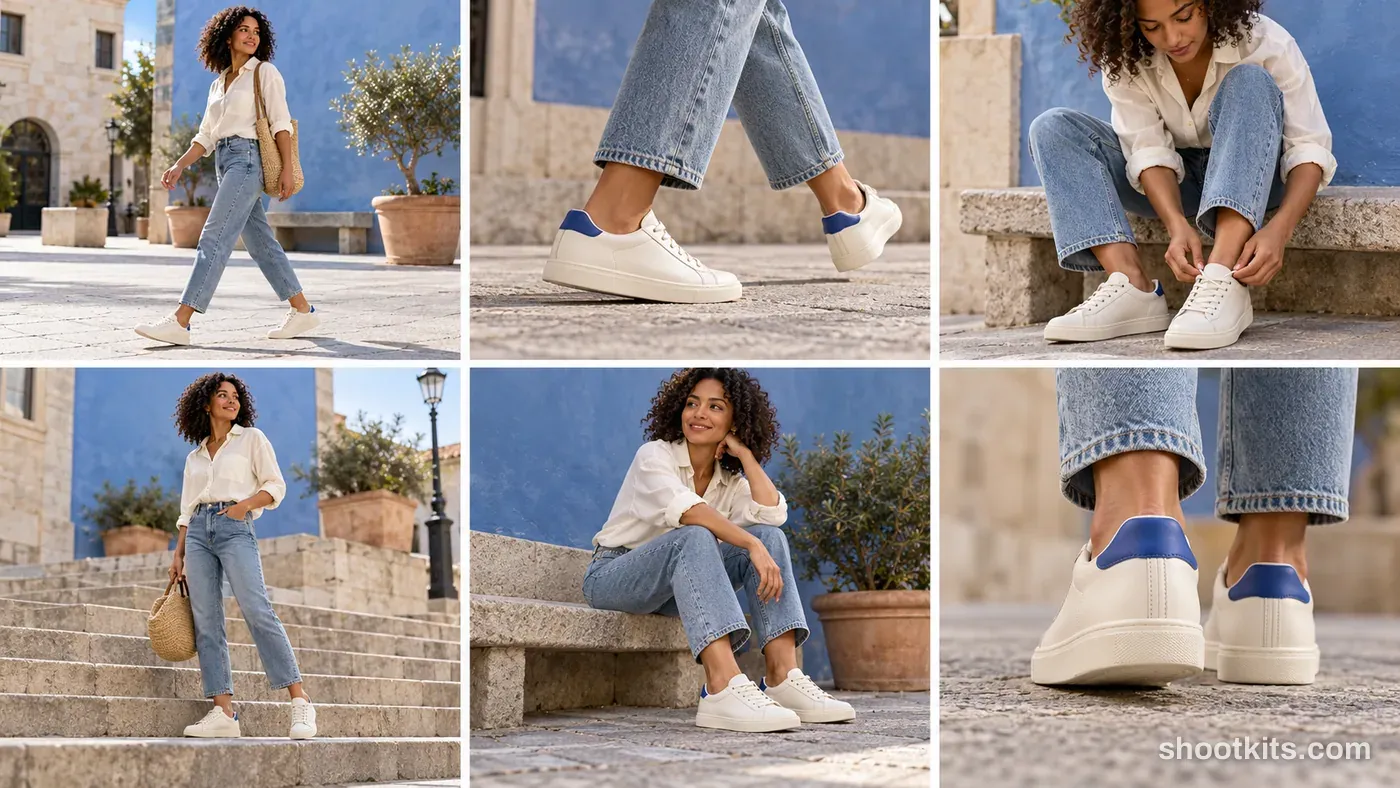
- Footwear: Sneakers stepping off a kerb, laces tied on a bench, a pair by the door after a run.
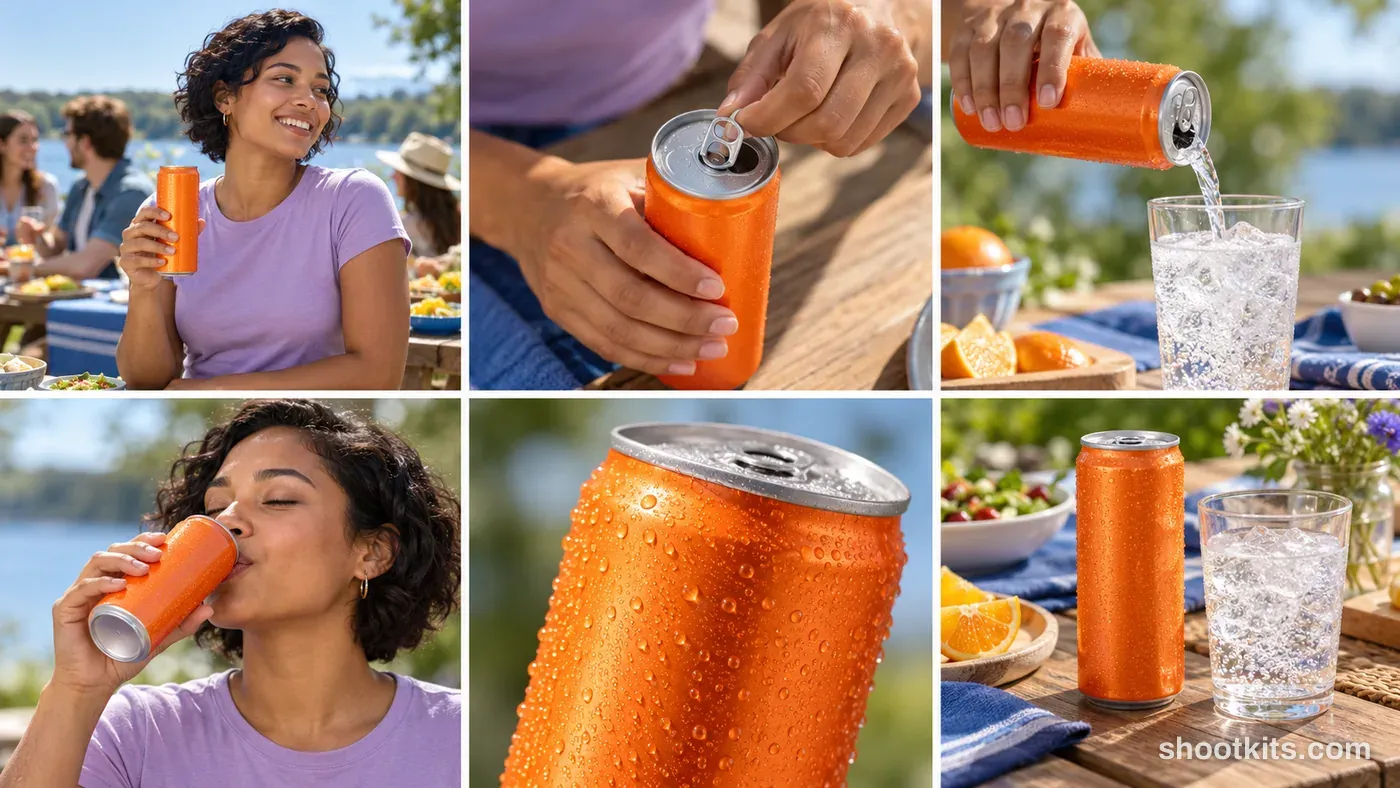
- Food and beverages: A jar open on a breakfast table, a can on a picnic blanket, a drink poured with ice at a garden lunch.
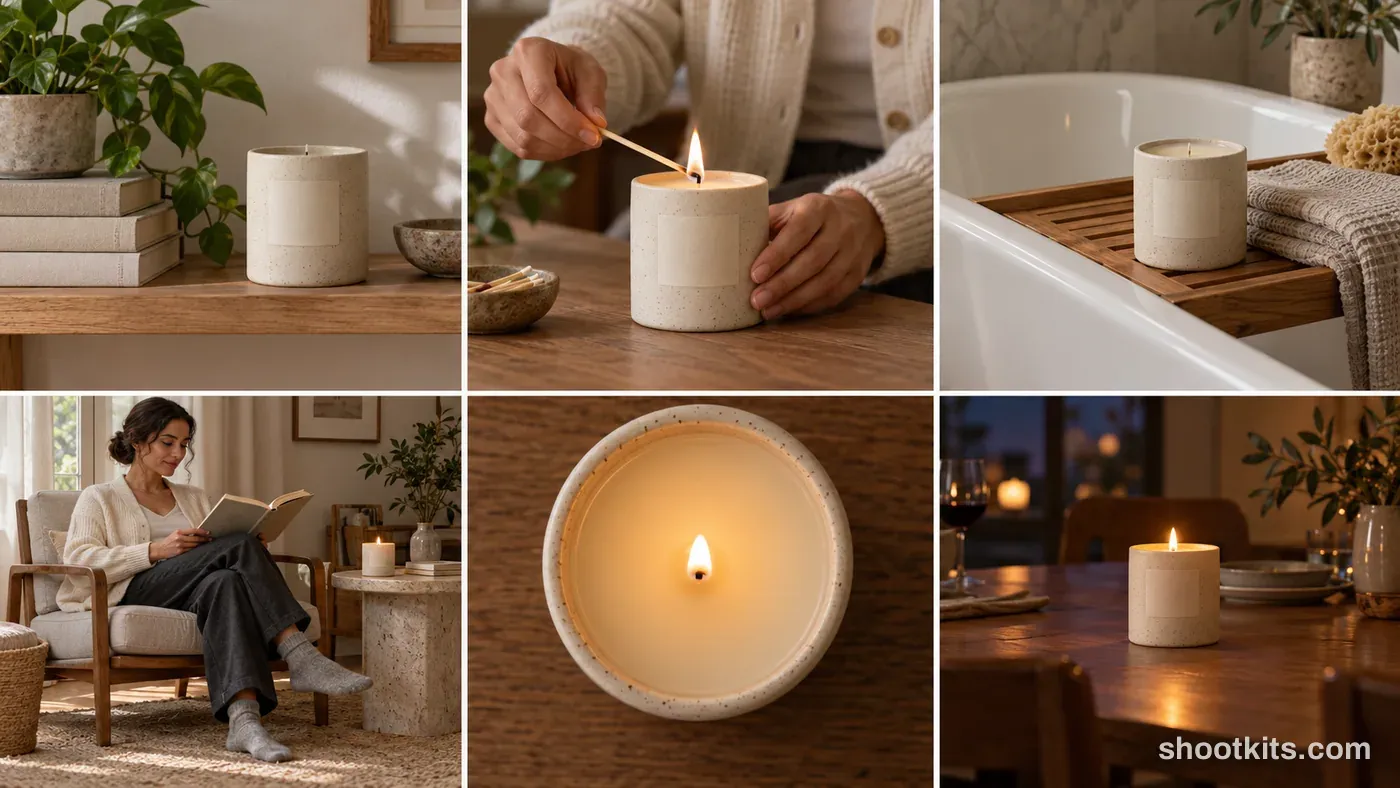
- Candles and home fragrance: A lit candle by the bath, a trio on a dinner table, a diffuser on a bookshelf on a rainy afternoon.
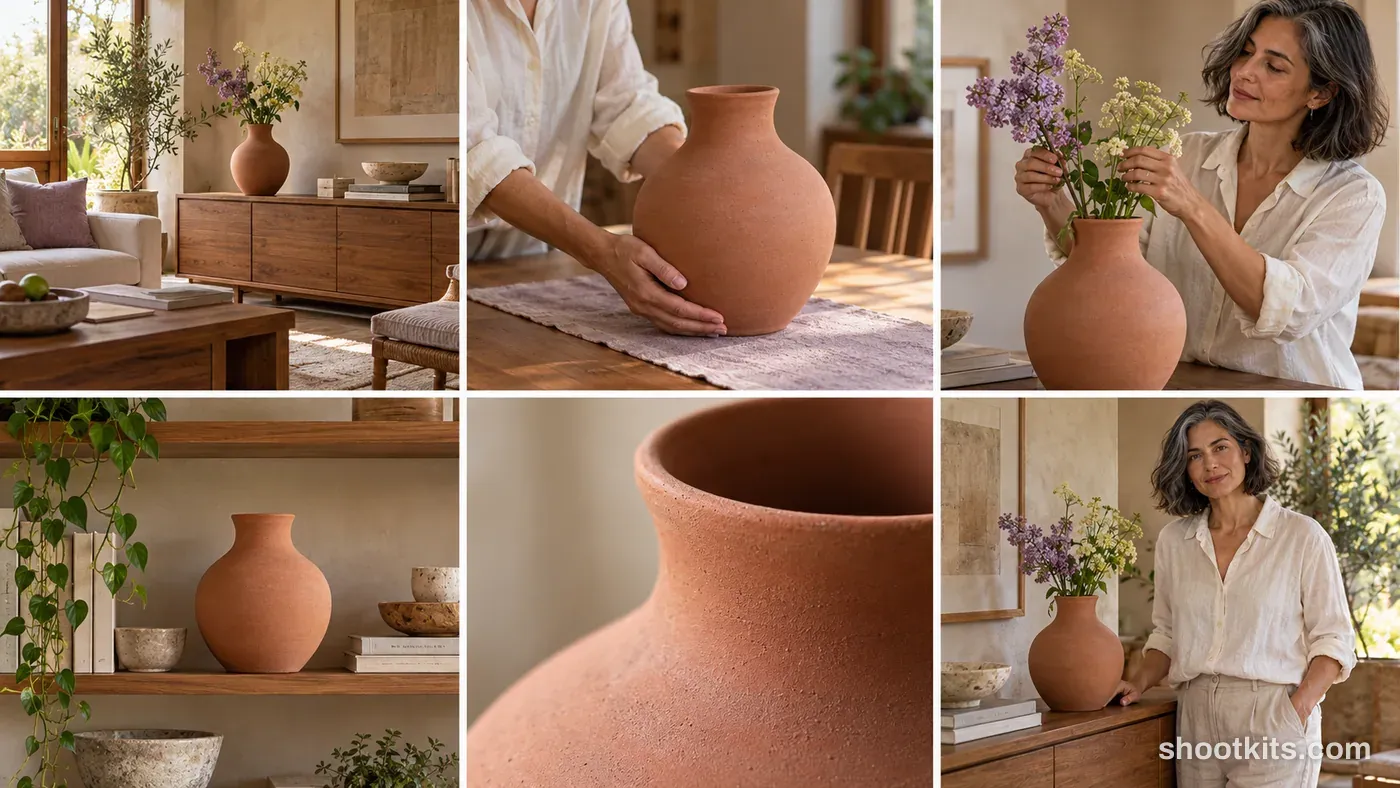
- Homeware: A vase on a dining table with fresh stems, a lamp lighting a reading corner, a throw on a sofa arm.
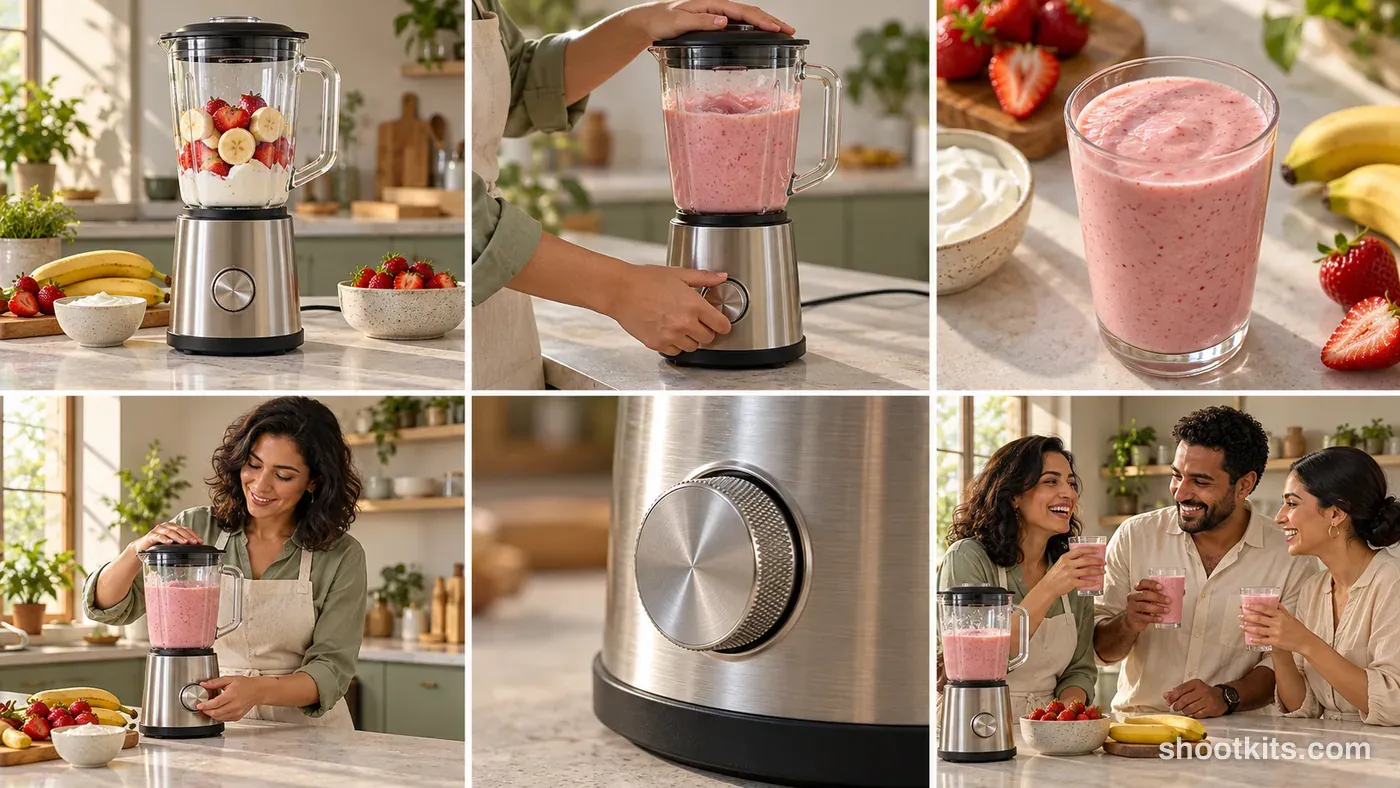
- Kitchen and appliances: An espresso machine on a morning counter, a blender making breakfast, an air fryer at dinner time.
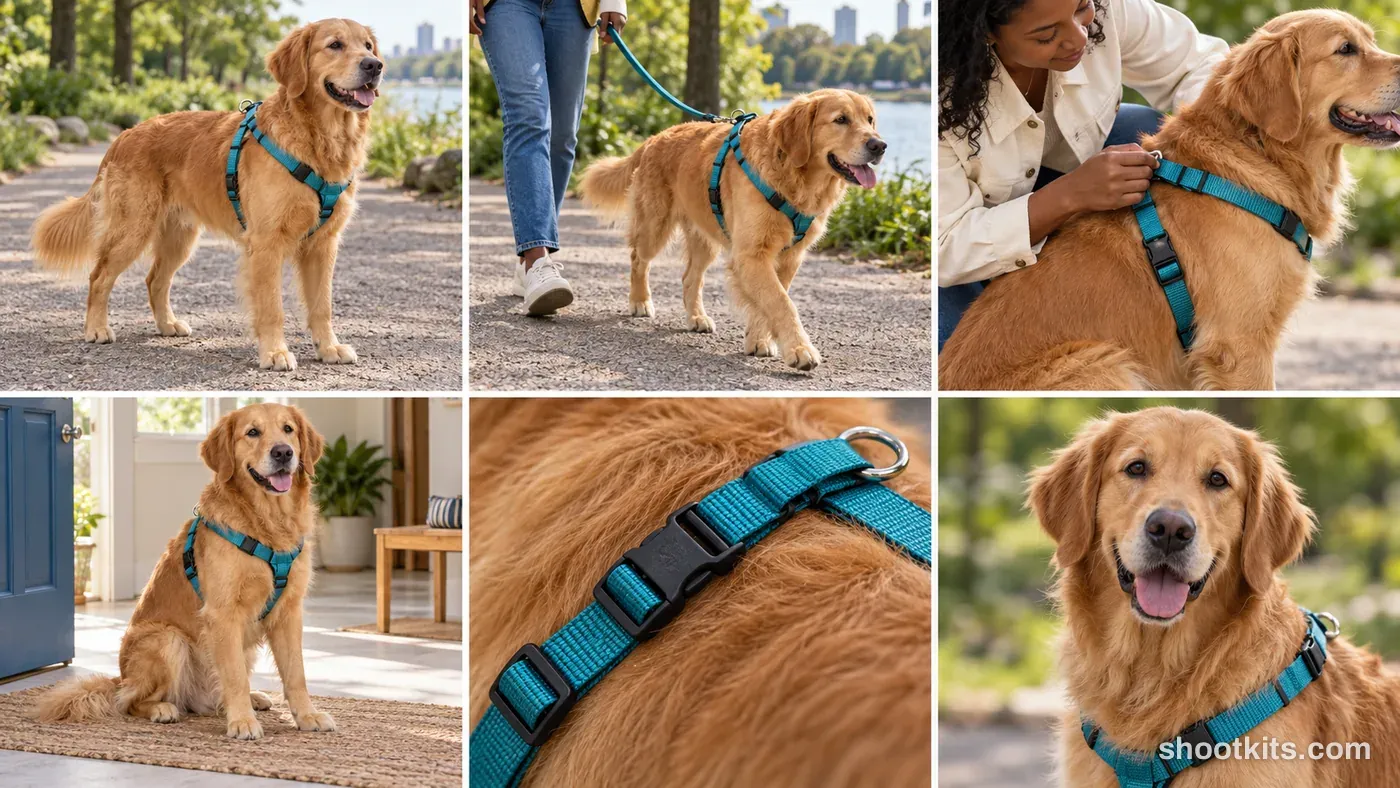
- Pet products: A dog asleep in its bed, a cat with a toy on the rug, a harness clipped on at the front porch.
- Kids and baby: A blanket in a cot at nap time, a bottle at the high chair, a toy on the playroom floor.
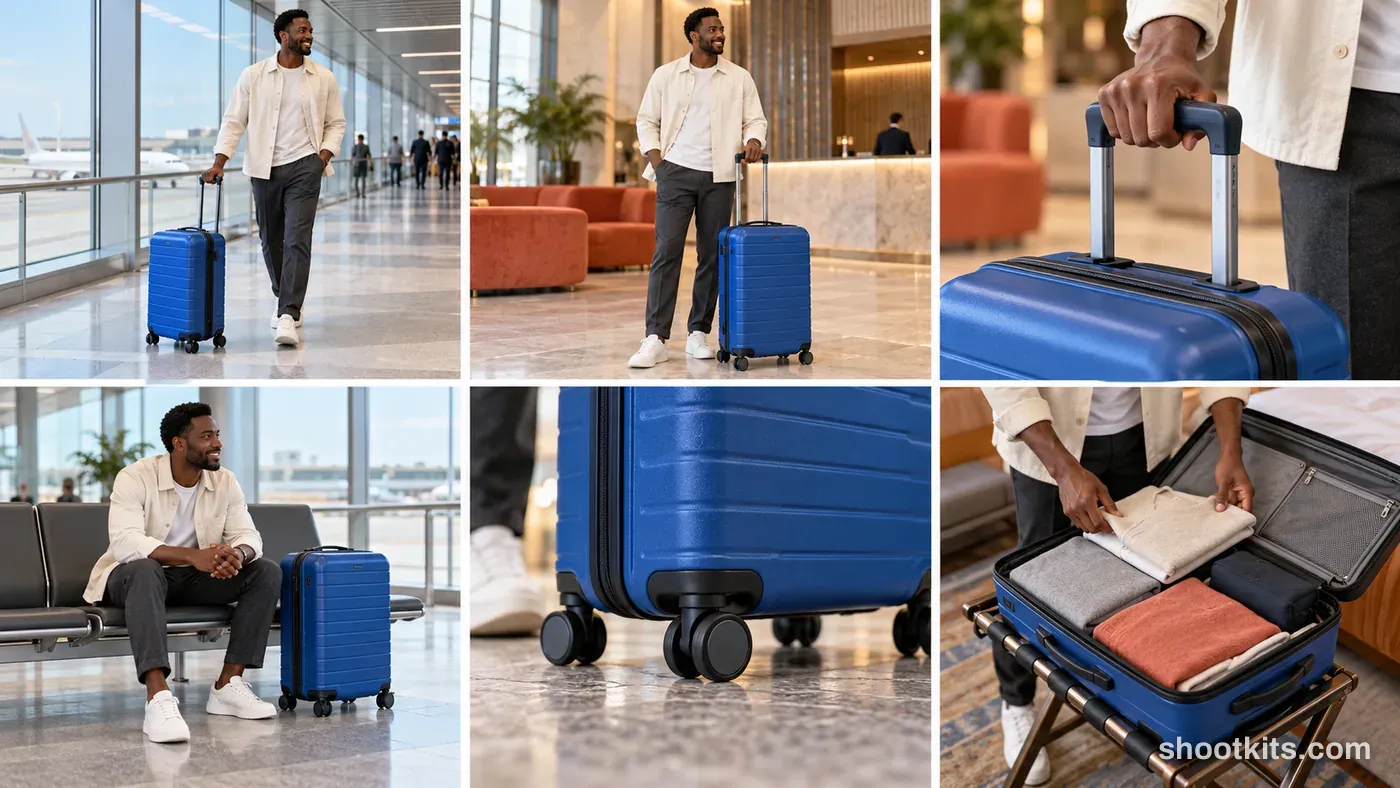
- Travel and luggage: A suitcase rolling through an airport, a duffel in a car boot at dawn, a case open on a hotel bed.
For an unposed, real-life feel that does well on social media, look at the documentary candid style. Every sector also has single lifestyle shots: browse them on the sector pages.
How to plan a lifestyle shoot
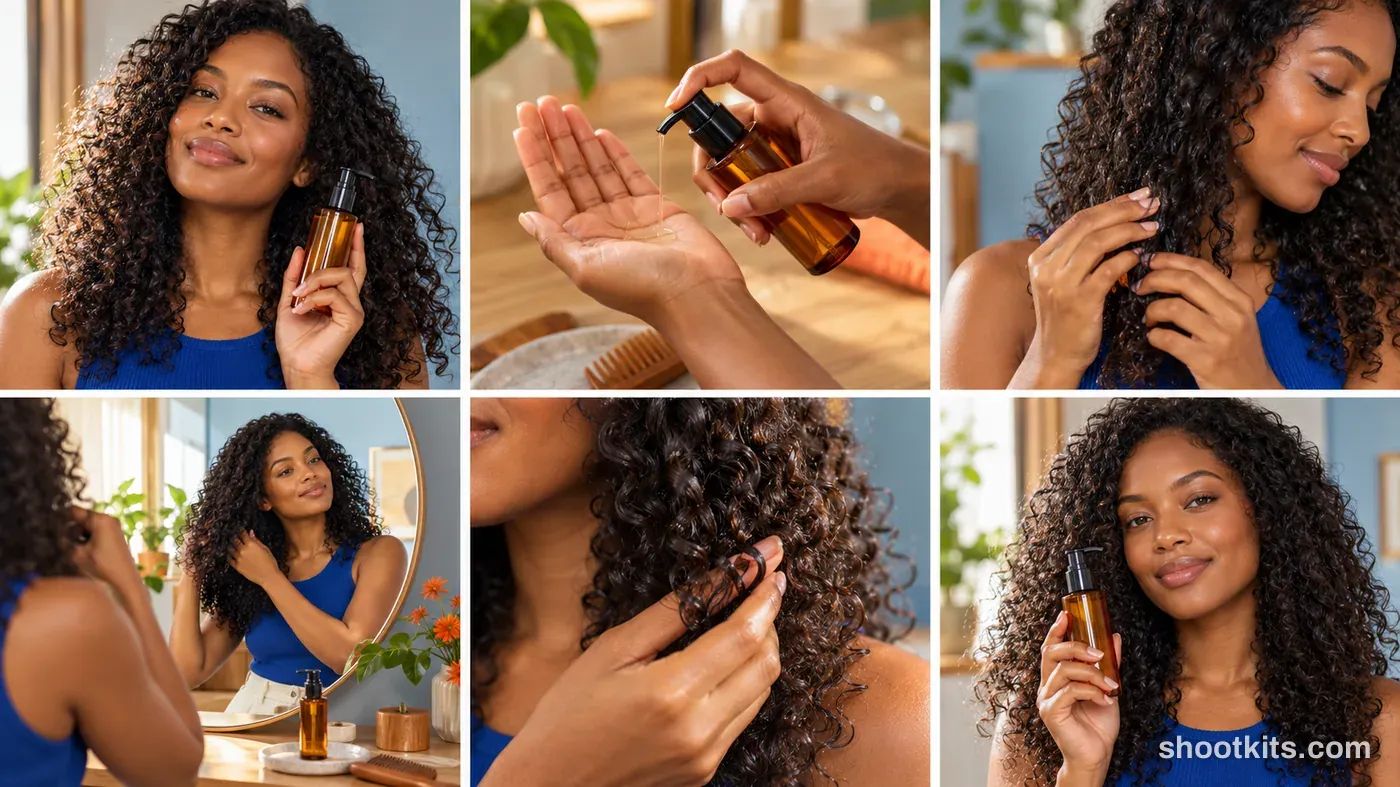
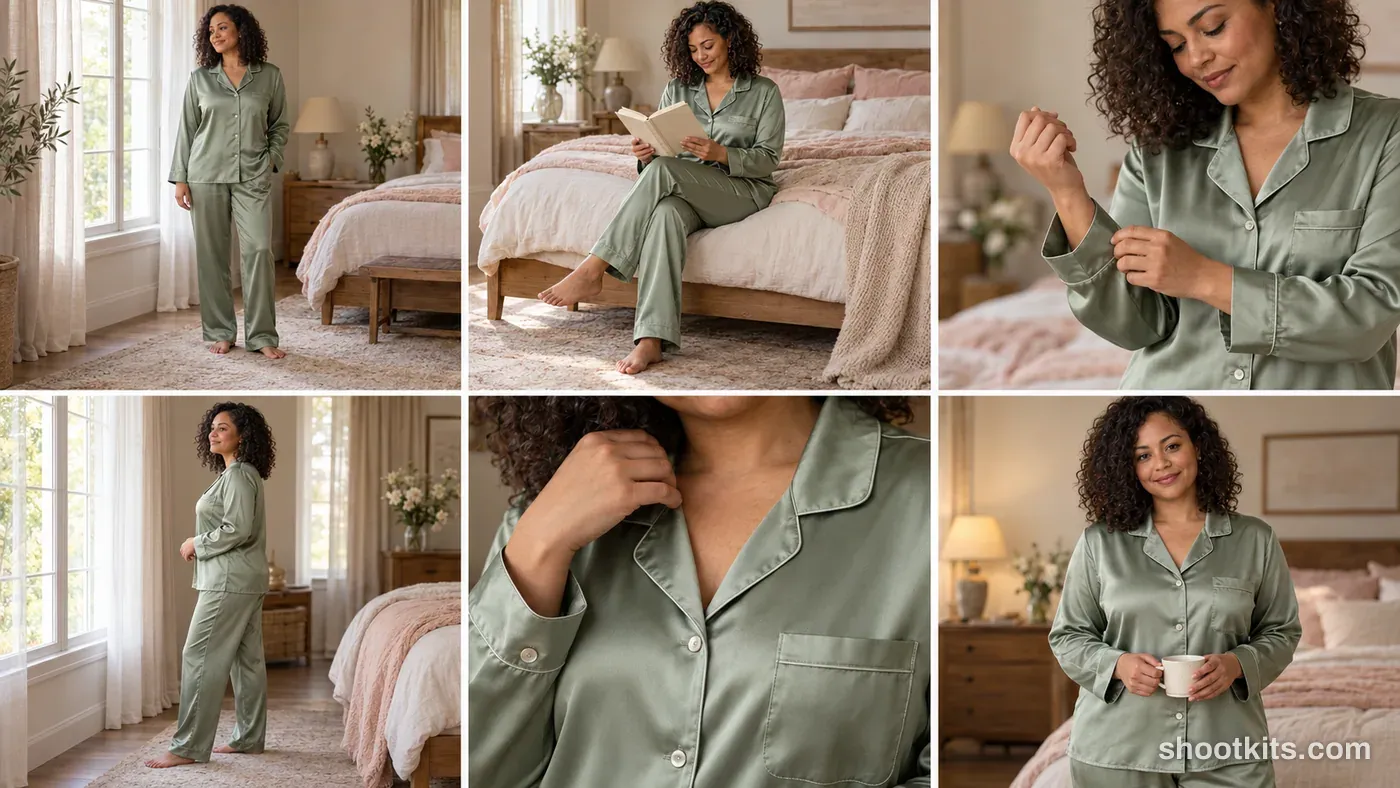
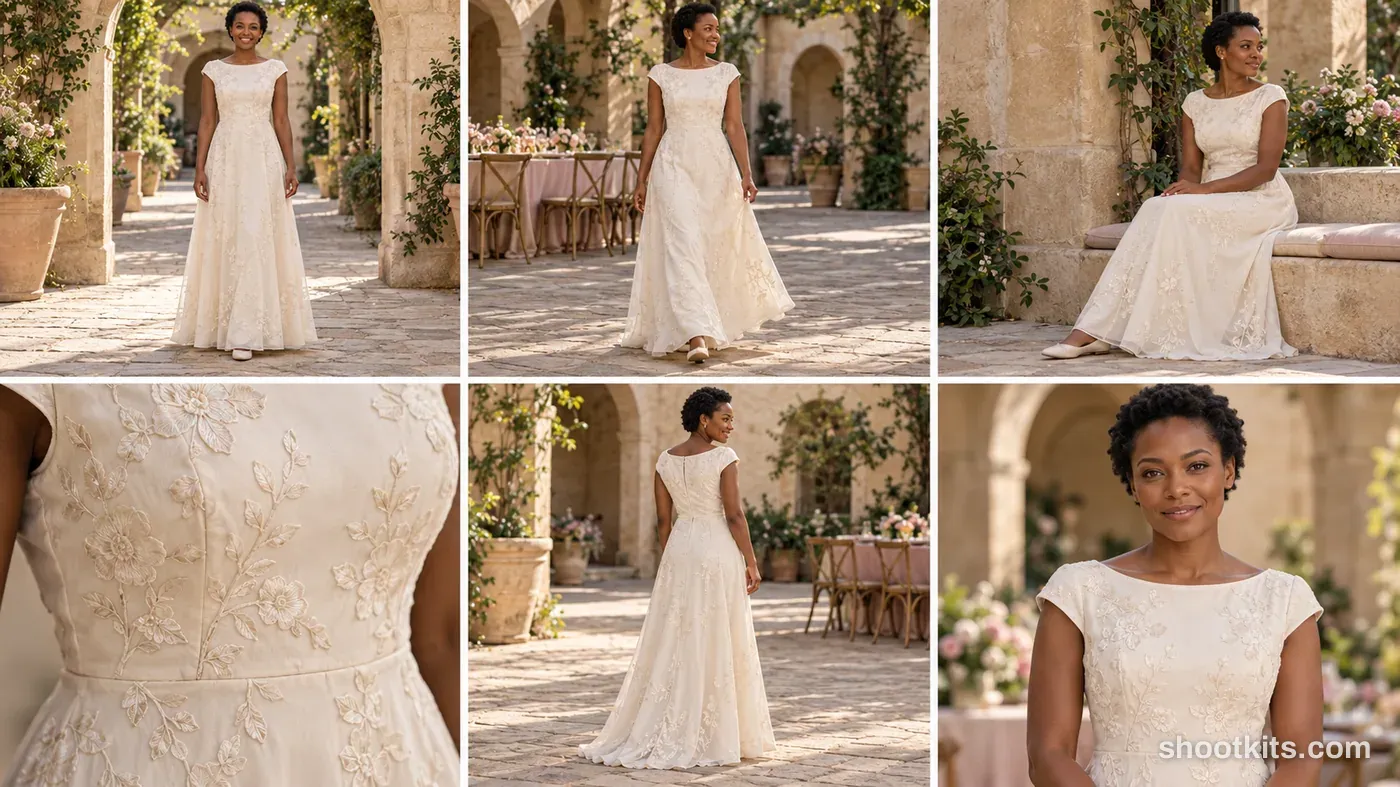
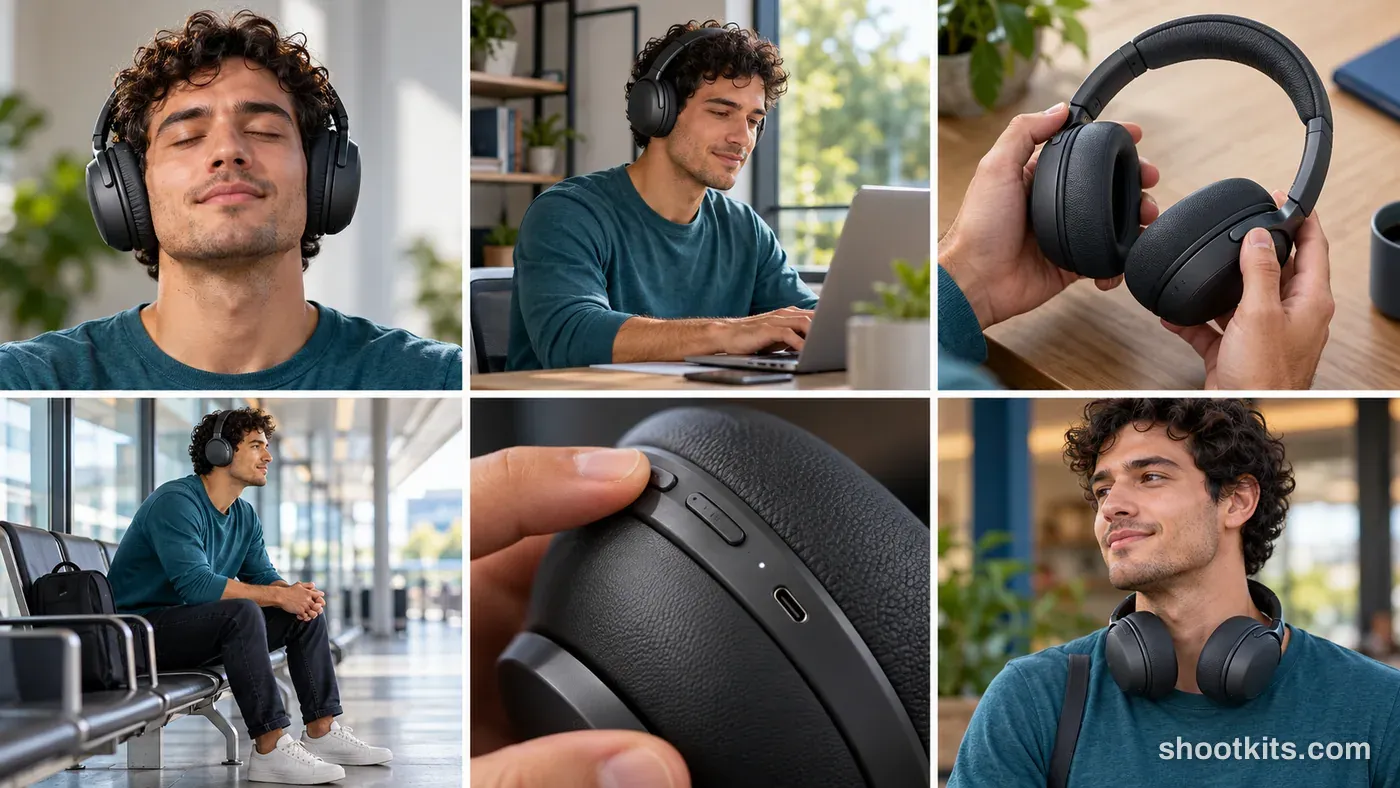
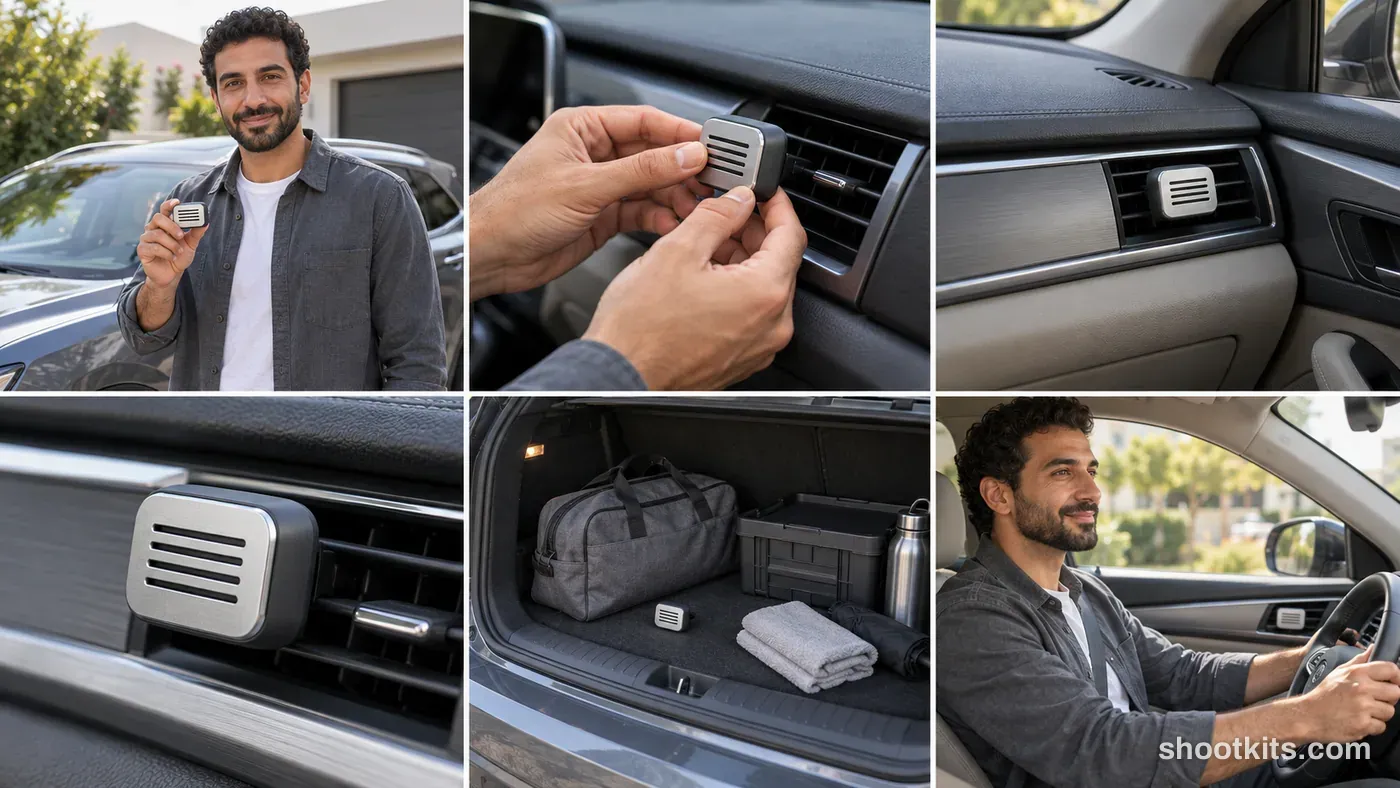
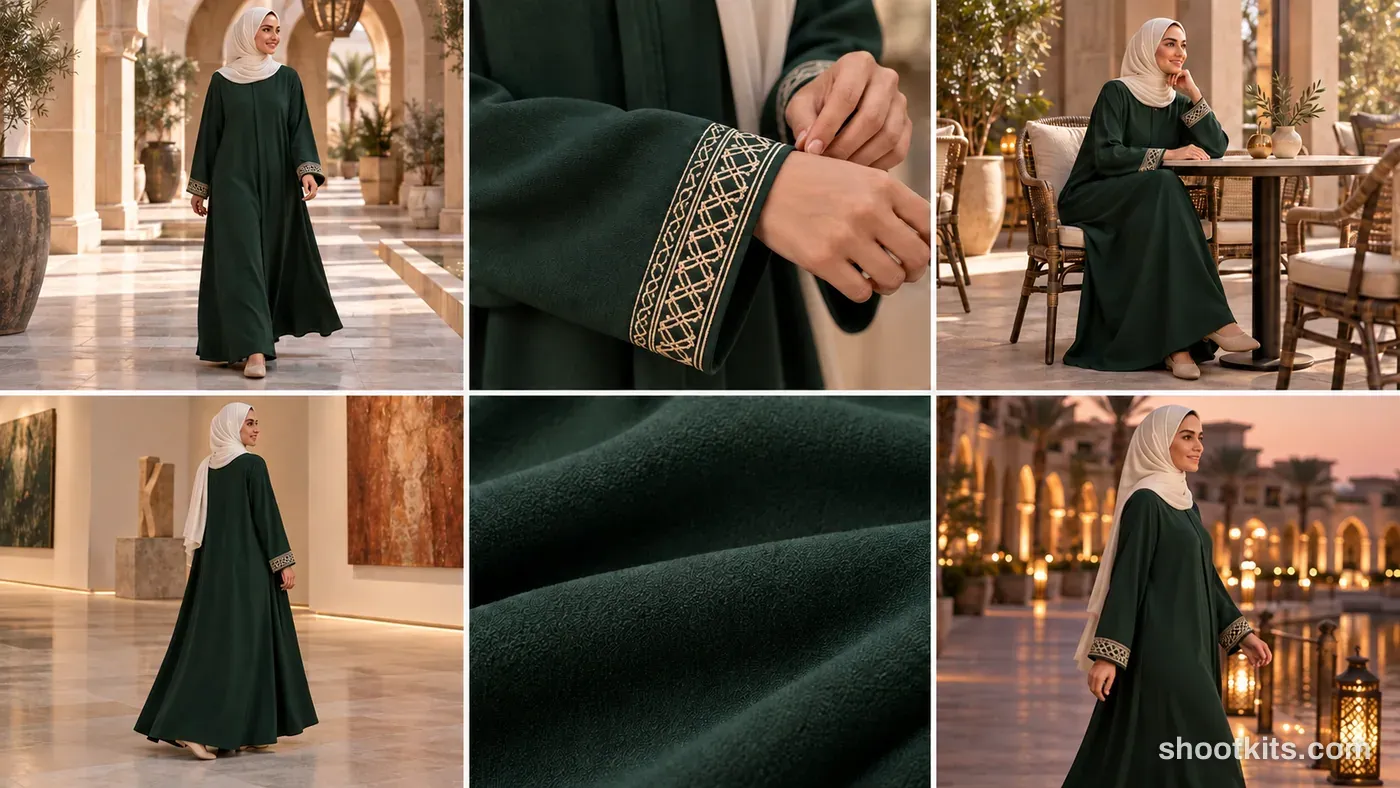
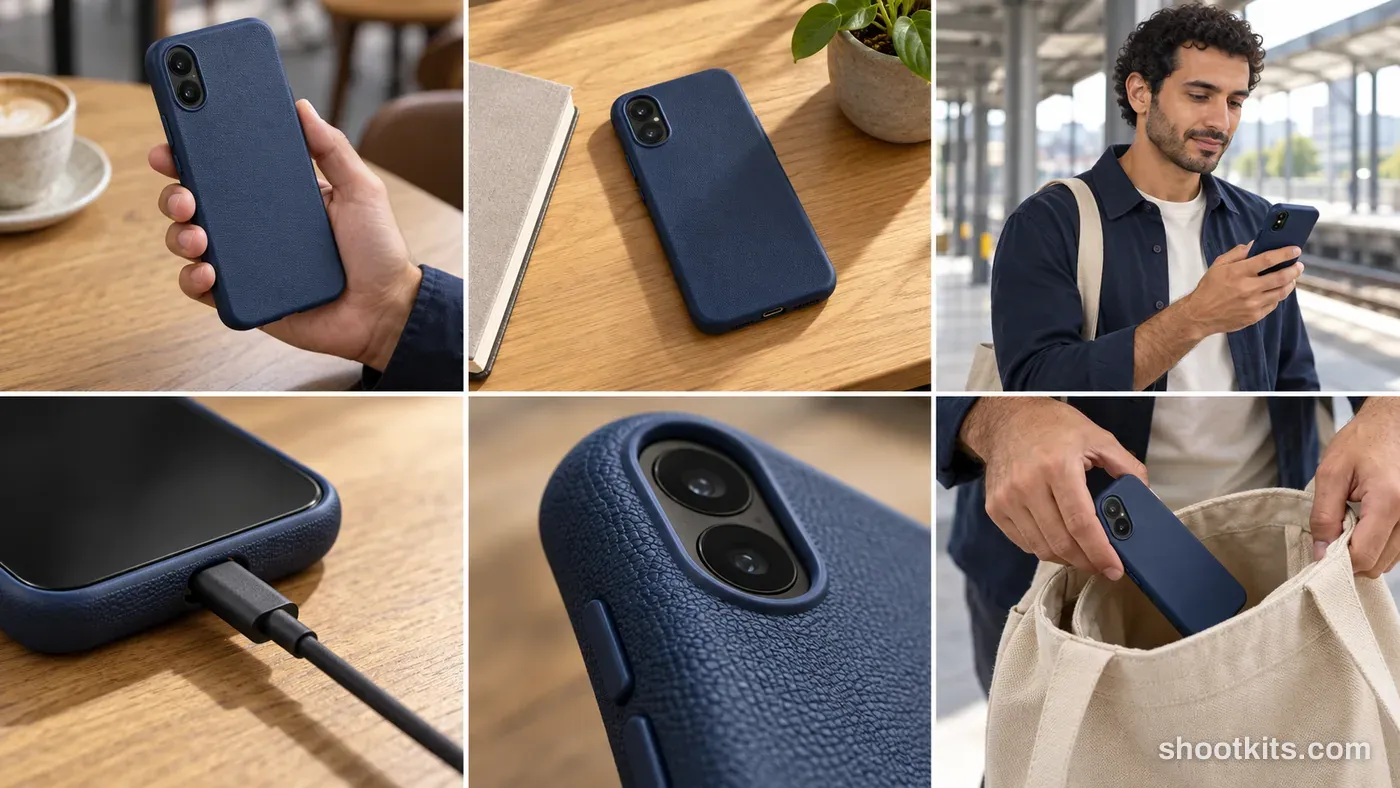
A good lifestyle set tells one short story from a few angles. Before you shoot or prompt, write down who the customer is, where they would use the product and at what time of day. Then plan six frames:
- Hero in context: the product in its setting, clearly the subject.
- In use: hands applying, pouring, wearing or holding it.
- Detail in the scene: a close-up of texture, label or material without leaving the setting.
- The wider moment: the room, table or street around it.
- A person moment: the model enjoying the result, product visible.
- A quiet still life: the product resting in the scene, useful for banners and text overlays.
How to make lifestyle product photos with ChatGPT
Staging a lifestyle shoot normally means a location, a model, props and good light on the same day. With ChatGPT you only need one clear photo of the product on a plain background.
- Photograph the product front-on in soft, even light.
- Pick a lifestyle kit for your product type from the list below.
- Attach your photo in ChatGPT, paste the prompt and send. The campaign prompts return a six-shot set with one consistent model.
- Check every image against the real product: colour, label, size and details. Ask for fixes in the same chat.
More detail on uploading and fixing results is in how it works. Selling jewelry? Read how to photograph jewelry.
What is lifestyle product photography?
Lifestyle product photography shows a product being used or placed in a real setting, such as a serum on a bathroom shelf or sneakers on a city street, instead of alone on a white background. It sells the moment and the feeling of owning the product, while plain product shots sell the details.
Is lifestyle photography better than white-background product photos?
Neither is better: they do different jobs. White-background shots are best for listings and comparison, because they show the product clearly and meet marketplace rules. Lifestyle shots work better for ads, social media, homepages and email, where people need a reason to stop and imagine using the product. Most stores need both.
How many lifestyle photos does a product need?
Two to four lifestyle images per product is a good target: one hero scene for your homepage and ads, one in-use shot with hands or a person, and one or two that show scale or a different setting. A six-shot campaign gives you enough for a product page, a launch post and several ads.
Do I need a model for lifestyle product photography?
Not always. Many lifestyle photos show only hands or no people at all: a candle on a shelf or a mug on a desk. A model helps most for anything worn or held, such as clothing, jewelry, watches and bags, because buyers want to see size and fit on a real body.
Can I use AI lifestyle images on Amazon and other marketplaces?
Amazon’s main image must be a photo of the actual product on a pure white background, but the other image slots are where lifestyle images belong. Whether you make them with a camera or with AI, they must show your product accurately, so check colour, size and details in every image and read the marketplace’s current image rules.